
Tools Used
- Building Motivation Over Time
- Financial Incentives and Disincentives
- Mass Media
- Overcoming Specific Barriers
- Prompts
- Vivid, Personalized, Credible, Empowering Communication
Location
London, England
Initiated By
City of London
Results
- 58% drop in non-compliant (most polluting) vehicles
- 9% decline in vehicle traffic in London, and the traffic did not shift to neighboring areas
- 37% net conversion rate from inactive to active modes of travel among elementary students
Case Study PDF
Landmark Case Study
London’s Ultra-Low Emission Zone Drives Shift to Cleaner Vehicles and Boosts Active Travel to School
This case study highlights how London England pairs charges for driving more polluting vehicles (the ‘stick’ or disincentive) with a series of vehicle scrappage schemes (the carrot) to entice drivers of more polluting vehicles to take them off the road. Consultations started in 2013, implementation started in 2019 in central London, and the program was continuing to expand in 2024.
The average number of non-compliant (more polluting) vehicles dropped by 100,000 (58%) between June 2023 and September 2024. In London, 42% of the children who took inactive modes at baseline switched to active modes and only 5% of those taking active modes at baseline switched to inactive modes. In contrast, only 20% of those In Luton switched to active modes and 21% switched to inactive modes. Roughly 260,000 more elementary students (37%) used active modes to get to school and back. Vehicle traffic declined by 9% in London and didn’t shift to neighboring areas.
Nitrogen Dioxide (NO₂), and fine particulate matter exhaust from cars and vans (PM2.5) dropped by 24% to 54%. For some of London’s most disadvantaged communities living near the city’s busiest roads, there was an 80% drop in the number of people exposed to illegal levels of pollution. There was a corresponding 18.5% drop in sick leave, 6.8% fewer health problems, and 10.2% fewer respiratory issues.
Background
Note: To minimize site maintenance costs, all case studies on this site are written in the past tense, even if they are ongoing as is the case with this particular program.
Air pollution had been recognised as the single largest environmental threat to human health in the region. And this threat disproportionally affected disadvantaged communities, and those with higher proportions of Black, Asian and minority residents, which further exacerbated existing health and economic disparities.
London’s Ultra-Low Emission Zones (ULEZ) provided a way to lower air pollution, using financial disincentives to deter the most polluting vehicles. It was built on the foundation of previous programs in London that had charged vehicles with relatively high emissions, based on the levels of those emissions.
- Launched in 2006, London’s Low Emission Zone (LEZ) was the oldest of these schemes. The LEZ initially applied only to large and heavy diesel vehicles, including lorries (trucks), buses, minibuses and vans, and operated 24 hours a day, every day of the year.
- In 2012, the LEZ was expanded to also include light goods vehicles.
- In 2017, the Mayor of London introduced a Toxicity Charge (T-Charge) in central London. At that time, it was the only vehicle emissions control scheme in the United Kingdon that included cars and small vans.
- In 2019, the T-Charge was replaced by the introduction of the ULEZ in central London, with the twin aims of enhancing both air quality and public health.
The previous clean air zone programs had shown that they could reduce air pollution and related health outcomes overall. But there was not much information about their impact on children’s health and school travel choices. At the time, less than half of children aged 5 to 16 met the UK guidelines of an hour of moderate-to-vigorous physical activity a day.
Getting Informed
2013
In 2013, the Mayor of London announced the intention to create a ULEZ. Consultations began in late 2013, over five years before the initial ULEZ implementation. This allowed for multiple consultation stages to hone program design and implementation aspects of the program based on public feedback.
The City of London involved key stakeholders in developing its proposals (prior to consultation) and held a stakeholder workshop in November 2013 that engaged 30 stakeholder organizations.
2014
A second event in March 2014 enabled 75 stakeholder organizations stakeholders to hear about the emerging proposals and discuss them with city staff.
A consultation for two months at the end of 2014 involved more than a hundred stakeholders. The city emailed over 700 stakeholder contacts with a summary of the proposal, a link to the online consultation portal, and an invitation to a stakeholder breakfast in November 2014. The breakfast consultation enabled 60 stakeholder organizations to hear updates on the plans and discuss them further with city staff. Over half of stakeholder responses came by email (47 out of 123 responses) and under half (47) were received via the online consultation portal. Overall, the vast majority supported the approach, and almost half thought it should go further.
This was followed by consultations with the general public. Participants could provide their responses in the following ways.
- Online through the consultation portal
- By Email
- By returning a marked-up hard copy questionnaire
In all there were over 16,000 responses from the general public / individuals (87%) and businesses (6%). Almost all of these responses (99%) were received through the online portal.
- Four in five respondents considered it “very important” (51%) or “important” (28%) to tackle poor air quality in central London.
- Less than one third (31%) of respondents were opposed to introducing the ULEZ in central London. Almost twice as many (58%) supported introducing it.
- The survey also asked for participant’s reactions to proposed pricing for different kinds of vehicles, geographic boundaries, and extending the ULEZ in the future.
- Only a third (35%) of respondents favored a three year transition period for residents. More people (40%) opposed the idea.
- One in ten respondents (10%) thought that the ULEZ was just another tax on (way to raise money from) motorists.
An “Air Quality in London” survey that year found that almost all respondents (over 95%) were concerned about air pollution and supported policies to limit vehicle pollution.
2015
In the summer of 2015, the city consulted for two months with taxis and private hire vehicle operators, to fine tune how they would be integrated into the program. By this point, London was considered compliant for all but one air pollutant for which the European Union had set legal limits: nitrogen dioxide (NOx). Road transport was responsible for 50% of NOx emissions in London. High levels of particulate matter were also of concern.
2016
Further consultations took place in July 2016 and from October to December 2016, to better understand the views of the public and stakeholders on the following topics.
Introduction of the ULEZ was supported by 64% of respondents and opposed by 34%. The most mentioned concern, noted by only 6% of respondents, was that the ULEZ would be yet another tax on motorists. Most respondents also supported future expansion of the ULEZ.
2017/2018
Further consultations took place from April to June 2017, and from November 2017 to February 2018. Most respondents supported the early start of the ULEZ in 2019 and the inclusion of particulate standards. In addition to standard promotion of the consultations, targeted emails were sent to 522,000 registered customers of the Congestion Charge scheme.
In total, there were 37,513 responses to the consultation from the public and businesses, with 98% of responses submitted online. The majority of respondents (90%) identified as individuals. In addition, there were responses from 142 stakeholder organizations.
By this point, 74% of the general public and 73% of the stakeholder organizations supported the ULEZ.
Prioritizing Audiences
Two groups of people were prioritised.
- People living in or travelling to London
- Children attending school in inner London and their parents
Setting Objectives
The aim of the ULEZ was primarily to improve air quality by reducing the number of vehicles operated in London that do not meet emission standards. This was due to the impact that poor air quality from polluting vehicles has on health.
Delivering the Program
ULEZ Introduction in Central London
In April 2019 London’s Ultra-Low Emission Zone (ULEZ) was introduced in Central London to improve air quality and public health. Vehicles had to meet specified exhaust emission standards or had to pay a £12.50 daily charge to operate within the zone. Heavy vehicles such as vans and buses only paid a fee if they did not meet the less strict Low Emission Zone (LEZ) emissions standard.
The emissions criteria were based on Euro standards, which regulated emissions from new road vehicles sold. The allowable emission levels were progressively lowered over time. (Building Motivation, Engagement, and Habits Over Time; Financial Disincentives)
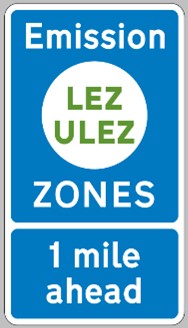
Image courtesy of City of London.
Scrappage of More Polluting Vehicles
From a ‘carrot and stick’ perspective, the charges for driving a more polluting vehicle were the ‘stick’ or disincentive. The ‘carrot’ was a series of vehicle scrappage schemes to foster the sale of more polluting vehicles and the corresponding avoidance of ULEZ charges.
In February 2019, in preparation for the launch of the ULEZ, the Mayor of London introduced the first of these - a scheme for vans and minibuses. (Financial Incentives; Overcoming Specific Barriers; Prompts)
Later that year - in October 2019 - the city launched a £61 million scheme for cars and motorcycles, to help low-income and disabled Londoners, small businesses and charities who would have found it financially challenging to comply with the ULEZ. In September 2020, a scrappage scheme for heavy vehicles was introduced.
These schemes were so popular that all funding was allocated by November 24, 2022. Many who used the scrappage schemes did not replace their scrapped cars and subsequently used more sustainable modes of transport more often.
ULEZ Zone Expansion
The ULEZ zone first expanded from ‘Central London’ to ‘Inner London’ on October 25, 2021. That same year, emissions standards for the ULEZ were made stricter.
Then, in August 2023, the Mayor of London expanded it across all London boroughs covering 1,500 km2 and nine million people. That made it the largest low-emission zone in the world.
In preparation, London began an extensive public information campaign in January 2023, along with stakeholder and local borough engagement and media activity. This included leaflets, online guides, and engagement materials to explain how the ULEZ worked and highlight its benefits, particularly for improved air quality and public health. These resources consistently promoted walking, cycling, and use of public transport as better alternatives to driving.
The city also engaged third-party mapping apps, like Google, Apple, and Waze, to pass on information about the ULEZ and its boundary when users planned trips in London. (Mass media, Vivid, Personalized, Credible, Empowering Information)
Also in early 2023, the Mayor launched a new £110m vehicle scrappage scheme to support the expansion. Starting that year, instead of using the scrappage fee to buy a less-polluting vehicle, participants could opt to receive a higher value package that promoted the use of more sustainable travel options. The package included up to two annual bus and tram passes, and exclusive offers to help make switching to more sustainable forms of transport easier and more attractive.
The new scheme also included small businesses and charities (11 to 49 employees) and all Londoners with an eligible non-ULEZ-compliant car or motorcycle. Eligible businesses and charities could scrap or retrofit up to three vehicles.
The scheme received over 140,000 applications from over 76,000 applicants over 20 months. It was so popular that the mayor increased its budget to £160m in August 2023 and to £210m in January 2024.
Starting in March 2024, the scheme allowed applicants the option of donating (rather than scrapping) vehicles to support humanitarian and medical needs in war-torn Ukraine and still receiving the same grant payment.
Application volumes declined in 2024 and compliance with ULEZ standards was high. On September 8, the scrappage scheme stopped accepting new applications.
Overcoming Barriers to Riding a Cleaner (ULEZ compliant) Vehicle
The following table lists the main barriers to riding a cleaner (ULEZ compliant) vehicle, and how the program addressed them. It is based on post-program interviews.
|
Barrier |
How it was addressed |
|
· Cost to fix or buy a vehicle to meet higher (ULEZ) standards |
· Vehicle Scrappage Fund incentives |
|
· Inertia |
· Promotion · Vehicle Scrappage Fund incentives |
Overcoming Barriers to Walking or Cycling to School
The following table lists the main barriers to using active modes of transportation, and how the program addressed them. It is based on post-program interviews.
|
Barrier |
How it was addressed |
|
· Convenience and time savings driving in a car |
· Due to increasing congestion, taking a car was becoming less convenient and was taking longer · The ULEZ provided a financial disincentive for taking a non-complying car |
|
· Poor air quality made active travel less pleasant and healthy |
· The ULEZ improved air quality, making it more pleasant and healthier to walk and cycle |
Measuring Achievements
Vehicle Scrappage Scheme
The vehicle scrappage scheme counted the number and type of vehicles processed. In addition, Transport for London issued an online survey to grant recipients and received 735 responses.
Shift to Cleaner Vehicles
The number and proportion of vehicles meeting the ULEZ standards were calculated as follows.
- A network of almost 4,000 cameras detected vehicles as they entered and traveled within the ULEZ. The license number of each vehicle was recorded.
- The license number was cross-referenced with available Driver and Vehicle Licensing Agency records to obtain information on vehicle type, age, applicable Euro standards, and emissions.
Since those who lived and drove in London had been engaged since the introduction of the T-Charge in 2017, that date was chosen as the reference baseline for measuring the impact of the ULEZ over the long-term.
Children's Health in London and Luton (CHILL) Study
The Children's Health in London and Luton (CHILL) study evaluated how ULEZ affected children's health. Study investigators approached schools in the area and met with staff representatives of participating schools to discuss details and address any concerns. The study recruited 6–9-year-old students and obtained parental consent. The most fruitful recruitment methods were school assemblies, playground visits, classroom talks, and school communication channels.
CHILL was a prospective parallel cohort study of ethnically diverse children attending 84 schools located within or near ULEZ areas. The study was planned to involve only primary school students, but due to the COVID-19 pandemic, it was extended to track these students through secondary school. Data collection stopped after five years in July 2023. The intervention group was in central London. The control group lived in the nearby Luton / Dunstable area.
Baseline data came from school visits from June 2018 to April 2019, prior to ULEZ implementation. Post-intervention data were collected from June 2019 to March 2020.
- 9,419 children in 84 schools were eligible to participate.
- Parental consent was provided for 3,414 (36%).
- Parent questionnaires were returned for 1,440 children from London (87%) and 1,615 (89%) from Luton who then took part in the annual assessment.
- At the post-intervention follow-up, there were 1,000 children from London (69%) and 982 from Luton (61%) still participating in the study.
- The reasons why students dropped out of the study included school closures due to COVID-19 (n=323 in 10 schools), changing schools (n=223), being absent for the school visits (n=79), and being withdrawn from the study by their parents (n=19).
- 418 parents did not return their forms at follow-up.
Data were collected directly from the children using health assessments, bio-samples, accelerometry, and questionnaires, and indirectly using questionnaires completed by their parents and teachers. The data were then analyzed using multilevel logistic regressions. Differences in descriptive data were analyzed using t-tests (for continuous variables) or Pearson's χ2 tests (for categorical variables.)
- Trained CHILL team members conducted annual health assessments at the children’s schools.
- They measured height, seated height, and weight. In addition, they conducted a verbal questionnaire regarding asthma, use of inhalers, and mode of transport to school.
- They assessed lung function using pre- and post-bronchodilator spirometry and following American Thoracic Society and European Respiratory Society guidelines. They measured forced expiratory volume in one second (FEV1), forced vital capacity (FVC), FEV1/FVC ratio, peak expiratory flow, and maximal mid-expiratory flow between 75% and 25% of the FVC.
- Parents completed an annual questionnaire at the time of the health assessment. They were asked about their employment and occupation status, household vehicle ownership, address, and their children’s demographics.
- In-person and online in-depth interviews with 21 families and seven teachers identified the main drivers of change and ongoing challenges in adapting to the ULEZ. These interviews took place between November 2022 and March 2023, before the ULEZ expansion in August 2023.
Other Benefits
The methodologies for evaluating other benefits are described in the London-Wide Ultra Low Emission Zone – One Year Report (March 2025) available at https://tfl.gov.uk/corporate/publications-and-reports/ultra-low-emission-zone
Providing Feedback
The CHILL study delivered feedback to participants and their classmates in the form of workshops alongside testing. Some of these workshop activities covered topics such as respiratory health, epigenetics, cognition, and general health impacts. During the COVID-19 pandemic, the team had to pivot their delivery methods to YouTube videos, Zoom town halls, and print-at-home activities, online newsletters, and email messaging.
As the study continued and participants grew older, feedback evolved from child-friendly “how many balloons full of air has the whole study collected?” to more concrete results and evaluations.
Financing the Program
Source of Funds
- The ULEZ was principally funded through the charges levied on higher polluting vehicles. No charges were collected between March 23 and May 17, 2020, during a national COVID-19 lockdown.
Costs
- The estimated costs to set up the expanded London-wide ULEZ are in the range of £145m - £155m. This includes costs of signage, detection and enforcement infrastructure, marketing, project overheads and risk.
- To fund the scrappage scheme launched in 2023, Transport for London distributed more than £210 million in grant funding to remove more than 53,000 more polluting vehicles.
Results
Shift to Cleaner Vehicles
According to the June 2025 evaluation, 96.3 per cent of all vehicles driving in the zone were compliant, with a 53 per cent reduction in non-compliant vehicles driving on an average day in the first six months of the ULEZ expansion compared to June 2023.
Of those who still drove non-compliant vehicles in June 2023, roughly 58% stopped driving them by September 2024. The average number of non-compliant vehicles observed per day dropped by 100,000 (58%) during that time period.
Scrappage Scheme
According to the June 2025 evaluation report, from January 23, 2023 to September 8, 2024, 35,094 cars, 17,964 vans, 300 minibuses, 237 wheelchair accessible vehicles, and 195 motorcycles were removed or upgraded through the vehicle scrappage scheme.
Transport for London’s survey of scrappage scheme participants found that the scheme helped reduce vehicle ownership and change travel behavior.
- 18% of car and motorcycle scheme respondents walked more and 12% utilized the bus more, as well as other active travel and public transport modes.
- 19% of van and minibus scheme respondents chose not to replace their vehicle and used their grant to reinvest in their business or charity, pay off expenses, or pay for public transport instead.
- 29% of car and motorcycle scheme respondents chose not to spend their grant on a replacement vehicle. This is slightly lower than the 34% of people who did this with their grant for the previous central and inner London ULEZ scrappage scheme.
The survey of scrappage scheme participants found that 63% thought the grant they received was very reasonable, reasonable, or neutral. Only 37% thought the grant was not reasonable.>/p>
Children's Health in London and Luton (CHILL) Study
Families reported that increasing costs and decreasing convenience of car travel both made active travel more appealing. Those who walked or cycled at baseline said the better air quality made their journeys more enjoyable and healthier. Their teachers noticed fewer asthma symptoms and more outdoor play.
Over the one-year study period, children at schools within the ULEZ were more likely to switch to active travel modes, and less likely to switch to inactive travel modes than children in the control group. This effect was strongest for students who lived further away from school.
In London, 42% of the children who took inactive modes at baseline switched to active modes and only 5% of those taking active modes at baseline switched to inactive modes. In contrast, only 20% of those In Luton switched to active modes and 21% switched to inactive modes.
Compared with the children in Luton, those in London were more likely to have switched from inactive to active modes (OR 3.64, 95% CI 1.21–10.92). They were also less likely to switch from active to inactive modes (OR 0.11, 0.05–0.24). Those living further from school were more likely to switch from inactive to active modes (OR 6.06,1.87–19.68) compared to those living closer (OR 1.43, 0.27–7.54).
Given that there were roughly 700,000 elementary school students in 2024, a 37% net conversion rate from inactive to active modes is equivalent to roughly 260,000 elementary students who would have switched to an active mode of travel. High school students would add to these numbers.
Other Benefits
Congestion and Consumer Spending
- Less Traffic Congestion
- Vehicle traffic declined by 9% in London
- Vehicle traffic didn’t shift to neighboring areas
- Retail and leisure spending were not impacted
Less Pollution
- Nitrogen Dioxide (NO₂) fell by 54% in central London, 29% in inner London, and 24% in outer London
- Fine particulate matter exhaust from cars and vans (PM2.5) dropped by 29%.
- Carbon dioxide emissions fell by 2%.
- For some of London’s most disadvantaged communities living near the city’s busiest roads, there was an 80% drop in the number of people exposed to illegal levels of pollution.
Better Health and Lower Health Care Costs
- 18.5% drop in sick leave
- 6.8% fewer health problems
- 10.2% fewer respiratory issues
- Self-reported increases in happiness and life satisfaction, and less anxiety
- £37 million drop in health care costs (attributed to reductions in respiratory illnesses and job absenteeism)
Notes
- This approach is best suited to large metros. It would be tough to replicate and adapt without strong governance, ANPR/camera infra, and legal authority.
- The Children's Health in London and Luton (CHILL) study illustrates how to recruit participating families through the school system.
- For some families, the vehicle scrappage payment did not fully cover the cost of a new ULEZ compliant car. And public transport outside central London was often described an expensive or poorly connected. This highlights remaining inequalities in access to cleaner, greener travel, and the need for affordable, well-connected transport options across all boroughs.
Landmark Designation
The program described in this case study was designated in 2025.
Designation as a Landmark (best practice) case study through our peer selection process recognizes programs and social marketing approaches considered to be among the most successful in the world. They are nominated both by our peer-selection panels and by Tools of Change staff and are then scored by the selection panels based on impact, innovation, replicability and adaptability.
The panel that designated this program consisted of:
- Charlotte Estey, Green Communities Canada
- Aaron Gaul, UrbanTrans
- Sara Hendricks, Center for Urban Transportation Research, University of South Florida
- Nathalie Lapointe, Federation of Canadian Municipalities
- Lisa Kay Schweyer, Foursquare ITP
- And Breathe Normally”: Impacts of low emission zones on sick leave and mental well-being. https://www.sciencedirect.com/science/article/pii/S0167268125001143?via%3Dihub
- Children’s Health in London and Luton (CHILL) cohort: a 12-month natural experimental study of the effects of the Ultra Low Emission Zone on children’s travel to school. https://ijbnpa.biomedcentral.com/articles/10.1186/s12966-024-01621-7
- London-wide Ultra Low Emission Zone – One Year Report https://content.tfl.gov.uk/london-wide-ulez-one-year-report.pdf
- London’s Ultra Low Emission Zone and active travel to school: a qualitative study exploring the experiences of children, families and teachers https://bmjopen.bmj.com/content/15/3/e091929
- Ultra Low Emission Zone https://tfl.gov.uk/modes/driving/ultra-low-emission-zone
https://tfl.gov.uk/corporate/publications-and-reports/ultra-low-emission-zone
For More information
Case Study Development Credits
This case study was was written by Jay Kassirer and Jacquelyn Bileth in 2025 and 2026, based on information linked to in the section “For More Information”, and correspondence with Paul Robinson, Information Governance Officer of the Greater London Authority.
Search the Case Studies
